
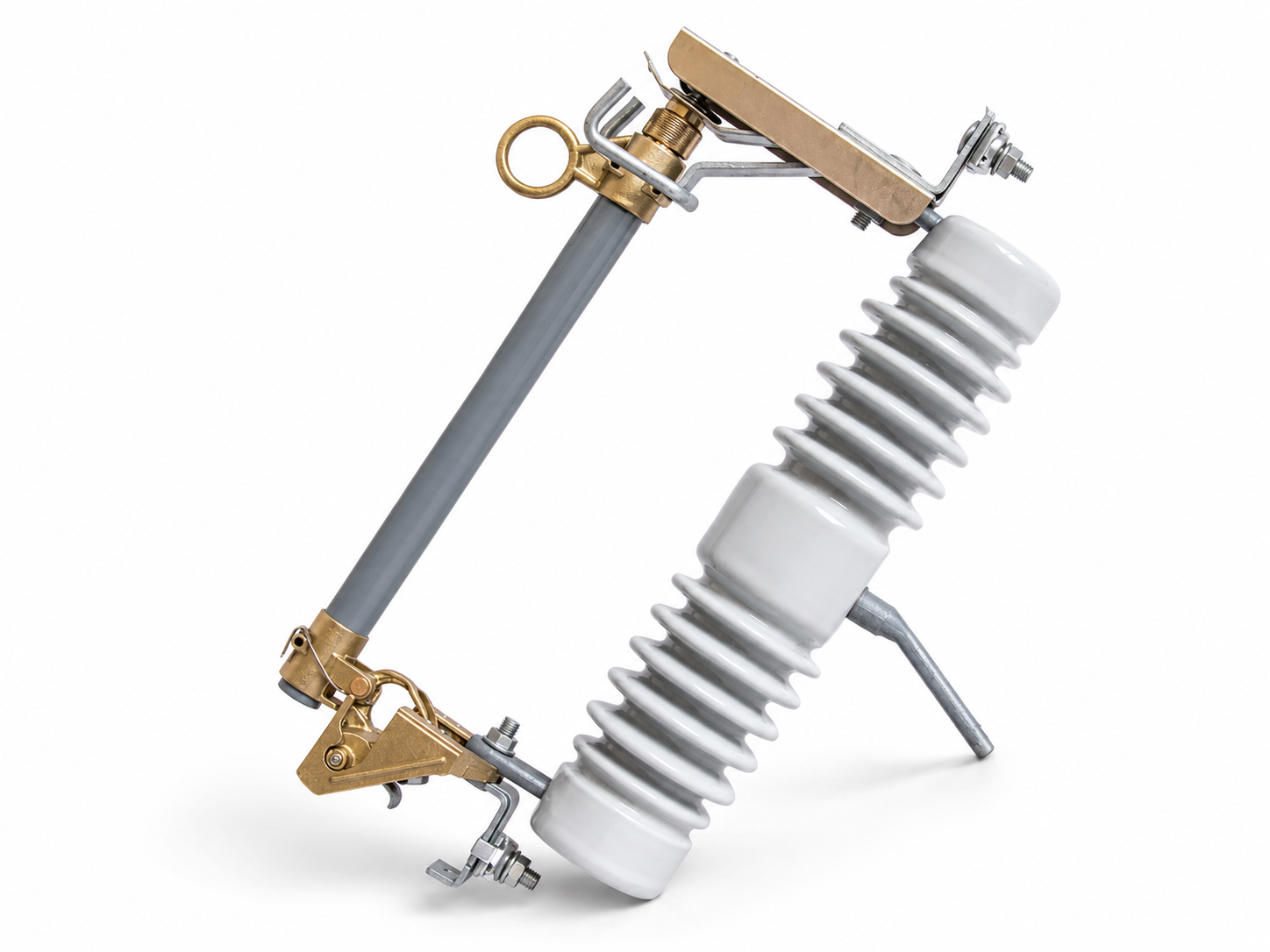
Composite (Polymer) GW4 Disconnecting Switches
HTV Silicone Insulators – 11-40.5 kV – 630-1250 A – Anti-Pollution
Same center-break GW4 design with HTV silicone rubber composite insulators replacing traditional porcelain. Hydrophobic surface suppresses pollution flashover, 50% lighter per column, impact-resistant for transport. Optimized for coastal, tropical, and high-pollution environments.
OEM / ODM – Low-MOQ samples – Type-test reports
Overview
The composite-insulated GW4 retains the identical center-break contact mechanism and galvanized steel base as the porcelain version, but replaces the glazed ceramic insulator columns with fiberglass-epoxy core rods covered by one-piece injection-molded HTV silicone rubber sheds. This material substitution eliminates the cement-bonding joint between insulator and metal flange — the most common mechanical failure point of porcelain insulators after decades of thermal cycling and mechanical stress.
The material advantage is hydrophobicity. Silicone rubber naturally repels water: moisture beads on the surface rather than spreading into a continuous conductive film. In coastal, industrial, and desert environments where porcelain requires periodic washing to prevent pollution flashover, composite insulators remain self-cleaning. The material also survives 1,000-hour salt fog testing per ASTM B117 with minimal tracking or erosion.
Weight reduction matters for two reasons: (1) transport and handling on site — a composite column weighs roughly 50% of its porcelain equivalent, reducing crane requirements; (2) seismic performance — the lighter, more flexible composite column puts less inertial load on the supporting steel structure during earthquakes, improving the switch’s survival probability in seismic zones.
Technical Specifications
| Rated Voltage | 12-40.5 kV |
|---|---|
| Rated Current | 630-1250 A |
| Short-Circuit Withstand | 16-31.5 kA / 3s |
| Peak Withstand | 40-80 kA |
| BIL Phase-Ground | 75-185 kV |
| Power Freq Dry Withstand | 42-80 kV |
| Creepage Distance | 625-875 mm (anti-pollution) |
| Insulator Type | HTV silicone rubber, 1-piece injection molded |
| Core Rod | Fiberglass-epoxy (crimped, not cemented) |
| Contact System | Same GW4 self-cleaning Cu/Ag |
| Base Frame | Hot-dip galvanized steel |
| Temperature Range | -40 to +80 C |
| Altitude | <=1000m (3000m on request) |
| Pollution Class | Class IV capable |
| Standards | IEC 62271-102 / IEC 60815 / GB 1985 |
Range
| Model | Voltage | Current | Insulator | SC (3s) | Weight |
|---|---|---|---|---|---|
| GW4-12/630-C | 12 kV | 630 A | Composite | 20 kA | ~100 kg |
| GW4-12/1250-C | 12 kV | 1250 A | Composite | 31.5 kA | ~115 kg |
| GW4-40.5/630-C | 40.5 kV | 630 A | Composite | 20 kA | ~130 kg |
| GW4-40.5/1250-C | 40.5 kV | 1250 A | Composite | 31.5 kA | ~145 kg |
C suffix = Composite insulator. 30-50% weight reduction vs porcelain equivalent. Earthing switch options identical to porcelain models.
Key Features
Silicone rubber surface repels water and contaminants. Rain washes away accumulated dirt naturally. Eliminates the need for periodic insulator washing in all but the most extreme pollution conditions.
Fiberglass rods are crimped directly to metal end-fittings, then overmolded with silicone. No cement to crack, no interface to separate after decades of thermal cycling.
1.5-4 kg per composite column vs 3-8 kg for porcelain. Easier pole-top handling, reduced crane size during installation, and lower shipping costs.
The composite column flexes under mechanical shock without fracturing. Survives 8-degree seismic events and rough transport handling that would crack porcelain insulators.
Rated for Class IV pollution (IEC 60815): industrial zones, deserts, coastal salt spray. The hydrophobic surface suppresses leakage current even with heavy surface contamination.
Same GW4 center-break mechanism, same self-cleaning contacts, same base frame. Spare parts interchangeable between porcelain and composite models.
Applications
Saline atmosphere causes rapid pollution buildup on porcelain. Composite hydrophobicity eliminates the need for 2x-4x annual washing that porcelain requires within 5km of coastline.
Sand and dust storms deposit thick contamination on insulators. Silicone rubber’s low surface energy prevents the formation of conductive wet-dust films during morning dew.
The lighter, more flexible composite column reduces seismic loading on support structures and survives ground acceleration that fractures brittle porcelain insulators.
Chemical plants, steel mills, cement factories: airborne conductive particles settle on insulators. Composite hydrophobicity maintains insulation integrity where porcelain would require monthly cleaning.
Frequently Asked Questions
Are composite insulators more expensive?
Do composite insulators age differently?
Can I mix porcelain and composite on the same 3-phase switch?
What standards cover composite insulators for disconnectors?
Need Composite Disconnectors for a Harsh Environment?
Tell us site conditions (coastal/desert/industrial) and voltage — we’ll recommend the right composite model.
Request a Quote
Send your requirement, model or drawing — we reply within 24 hours.
Thank You!
Your inquiry has been received.
We'll reply with a detailed quote within 24 hours.