
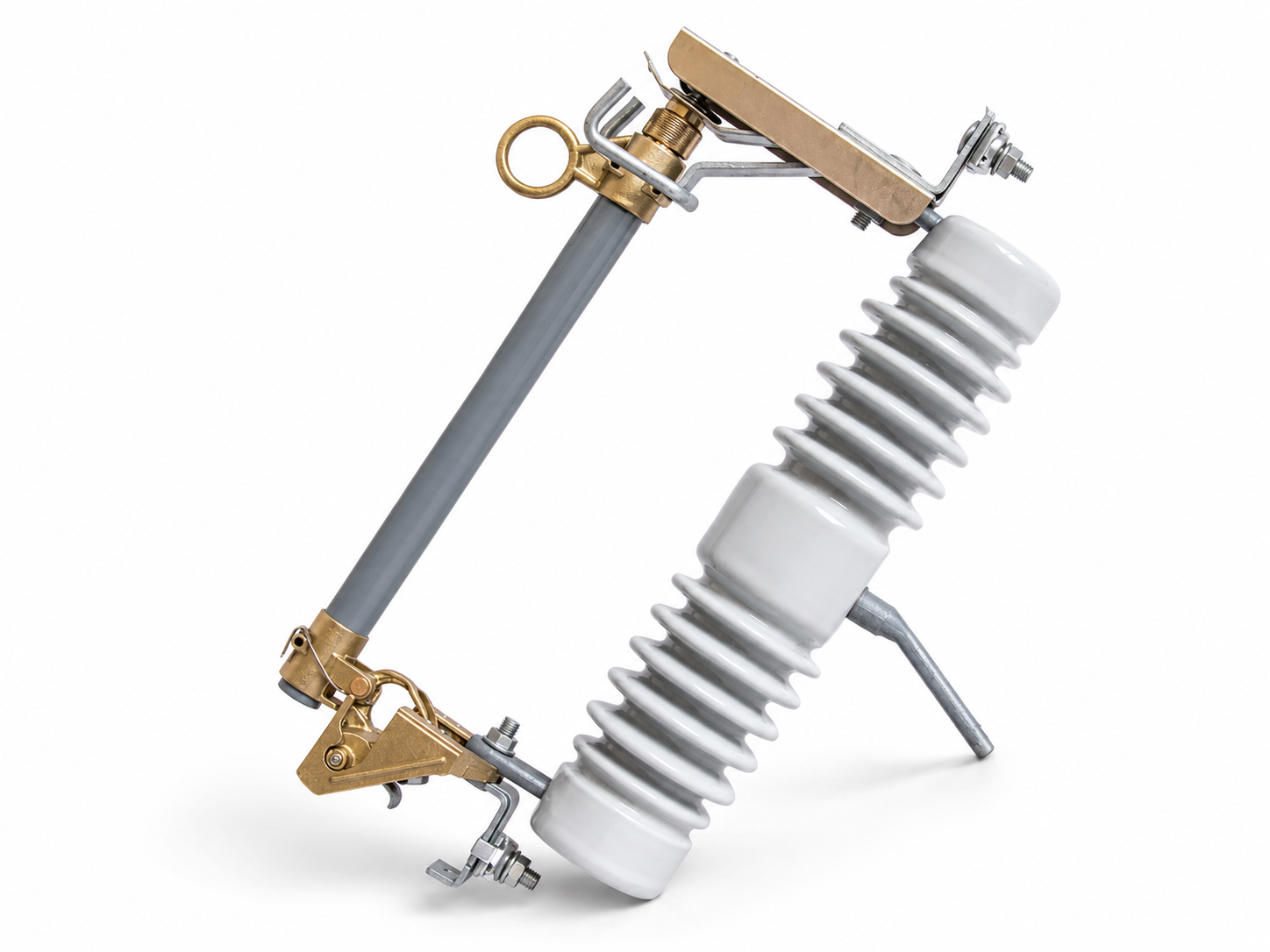
Earthing Switches for Disconnectors
GW4-E Series – Safety Grounding – IEC 62271-102 Annex E
Mechanically interlocked earthing switch that grounds the isolated circuit after the main blades open — discharging residual charge and providing a safe working condition. Integral to disconnector assembly or standalone pole for separate mounting.
OEM / ODM – Low-MOQ samples – Type-test reports
Overview
An earthing (grounding) switch is a safety-critical accessory to the main disconnecting switch. After the main blades open to isolate a circuit, residual capacitive charge remains on the disconnected conductors — enough to give maintenance personnel a dangerous, potentially fatal shock. The earthing switch closes a deliberate short-circuit from the isolated conductors to ground, discharging the residual energy and establishing a safe working potential.
The GW4-E earthing switch is typically mounted on the same base frame as the main disconnector, on the load side (transformer or feeder side). A positive mechanical interlock ensures it is physically impossible to close the earthing switch unless the main blades are fully open, and impossible to close the main blades unless the earthing switch is fully open. This interlock is the final defense against operator error — it cannot be bypassed without disassembling the mechanism.
Two configurations are common: (1) single-grounded: one earthing switch on the load side only — for transformer isolation where the source side is already grounded through the substation earthing system; (2) double-grounded: earthing switches on both sides of the disconnector — for line sectionalizing where either side could potentially be live.
Technical Specifications
| Rated Voltage | 12-40.5 kV |
|---|---|
| Short-Circuit Withstand (3s) | 16-31.5 kA rms |
| Peak Withstand Current | 40-80 kA |
| BIL Phase-Ground | 75-185 kV |
| Power Freq Withstand | 42-80 kV |
| Closing Speed | Spring-assisted fast close |
| Interlock Type | Mechanical, positive (cannot bypass) |
| Contact Material | Copper, tin/silver plated |
| Operation | Manual via separate handle |
| Mounting | Integral to GW4 base frame, load side |
| Clearance | Visible gap to main contacts when open |
| Standards | IEC 62271-102 Annex E / GB 1985 |
Range
| Model | Voltage | SC (3s) | Peak | Configuration | With Disconnector |
|---|---|---|---|---|---|
| GW4-E12/20 | 12 kV | 20 kA | 50 kA | Single-sided | GW4-12 |
| GW4-E12/31 | 12 kV | 31.5 kA | 80 kA | Double-sided | GW4-12/1250 |
| GW4-E40/20 | 40.5 kV | 20 kA | 50 kA | Single-sided | GW4-40.5 |
| GW4-E40/31 | 40.5 kV | 31.5 kA | 80 kA | Double-sided | GW4-40.5/1250 |
Standalone earthing switch (without disconnector) also available for separate pole mounting. Copper earthing bar to ground rod included.
Key Features
Can only close earthing switch when main blades are fully open. Can only close main blades when earthing switch is fully open. No electrical control or logic required — purely mechanical, fail-safe.
Spring-loaded mechanism snaps the earthing contacts shut within milliseconds, independent of operator speed. Prevents slow closing that could draw an arc if residual voltage is present.
Choose configuration based on circuit topology: single for transformer-side only, double for both sides (line section isolation where either end could be energized).
The earthing blade is clearly visible in its open and closed positions from ground level. Instant visual confirmation that the circuit is safely grounded before maintenance begins.
The mechanical interlock is type-tested to 2,000 operations. Each unit undergoes factory interlock function test before shipment. Certificate supplied with each switch.
An earthing switch can be retrofitted to an existing GW4 disconnector if the base frame has the mounting provision. Contact us with your existing model and serial number for retrofit assessment.
Applications
After isolating the transformer with the main disconnector, close the earthing switch to ground the windings. Residual charge from winding capacitance is safely discharged.
For line sectionalizing, a double-grounded disconnector grounds the isolated line section on both ends, discharging the line’s significant capacitive charge and protecting workers from induced voltages from parallel energized lines.
Circuit breakers, instrument transformers, and busbar sections can be isolated and earthed for maintenance access. The visible earth provides a positive indication of safe working conditions.
In locations where temporary portable earths are difficult to apply (high structures, awkward access), a permanently installed earthing switch eliminates the need for hot-stick-applied temporary grounds.
Frequently Asked Questions
Is the earthing switch rated to close onto a live circuit?
What happens if the interlock fails?
Do I need one or two earthing switches?
Does the earthing switch affect the disconnector’s short-circuit rating?
Need Earthing Switches for Safety Compliance?
Tell us the main disconnector model and configuration — we’ll supply the matched earthing switch.
Request a Quote
Send your requirement, model or drawing — we reply within 24 hours.
Thank You!
Your inquiry has been received.
We'll reply with a detailed quote within 24 hours.